



BEST QUALITY FOR YOU
Where Quality Meets Comfort.
PRICE MATCH GURANTEE
Find a better price and we will beat it.
SERVICE YOU CAN TRUST
Local techs and free lifetime phone support


Medline Control Syringe 12mL with Luer-Lock Tip - Thumb Ring Style (Case of 10)
Vendor:
Medline
Availability:
In stock
- $120.73
$126.77- $120.73
- Unit price
- per
Save $6.04
Subtotal:
$120.73
10 customers are viewing this product

Vendor: Medline
Medline Control Syringe 12mL with Luer-Lock Tip - Thumb Ring Style (Case of 10)


Vendor: Medline
Medline Control Syringe 12mL with Luer-Lock Tip - Thumb Ring Style (Case of 10)
Description
xProfessional Control Syringe for Interventional Radiology and Catheter Lab Procedures
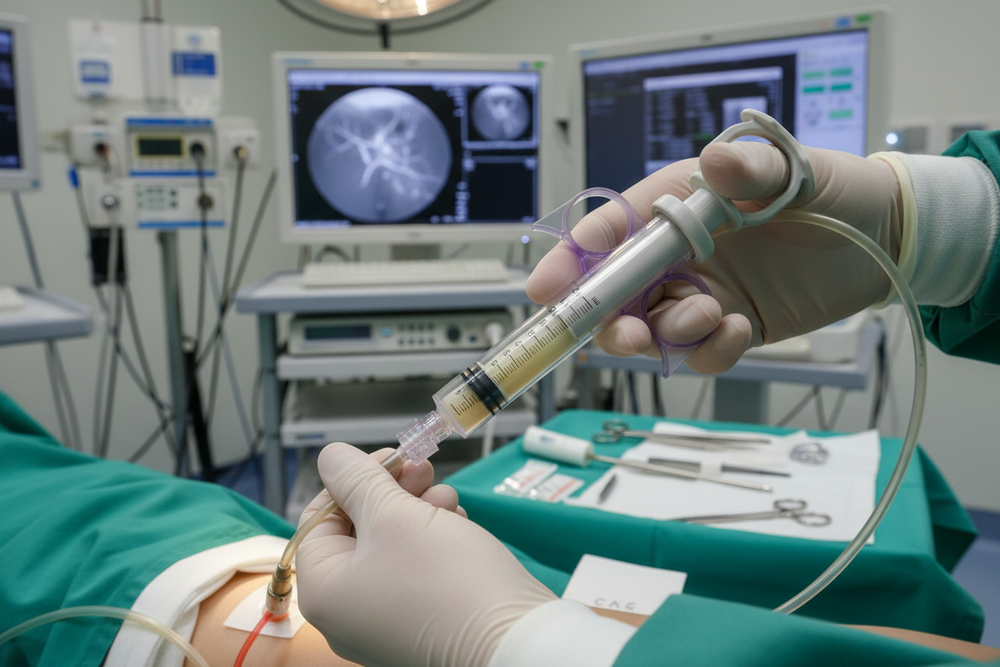
The Medline Control Syringe with Luer-Lock Tip, 12 mL is a precision-engineered medical device specifically designed for controlled aspiration and injection of saline, contrast media, and other fluids during interventional radiology procedures, cardiac catheterization, angiography, and other specialized diagnostic and therapeutic applications requiring precise fluid delivery and superior operator control. This professional-grade syringe combines thoughtful ergonomic design with high-quality materials to support accurate, controlled fluid administration in demanding clinical environments.
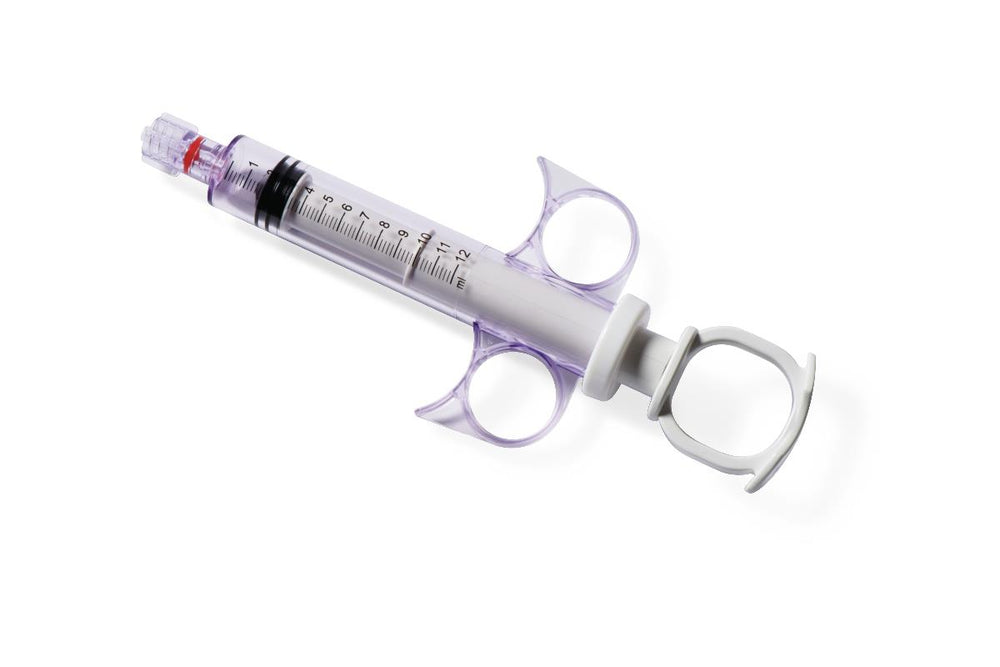
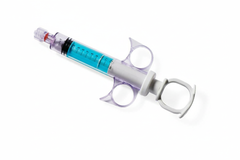
Clear Polycarbonate Construction for Superior Visualization
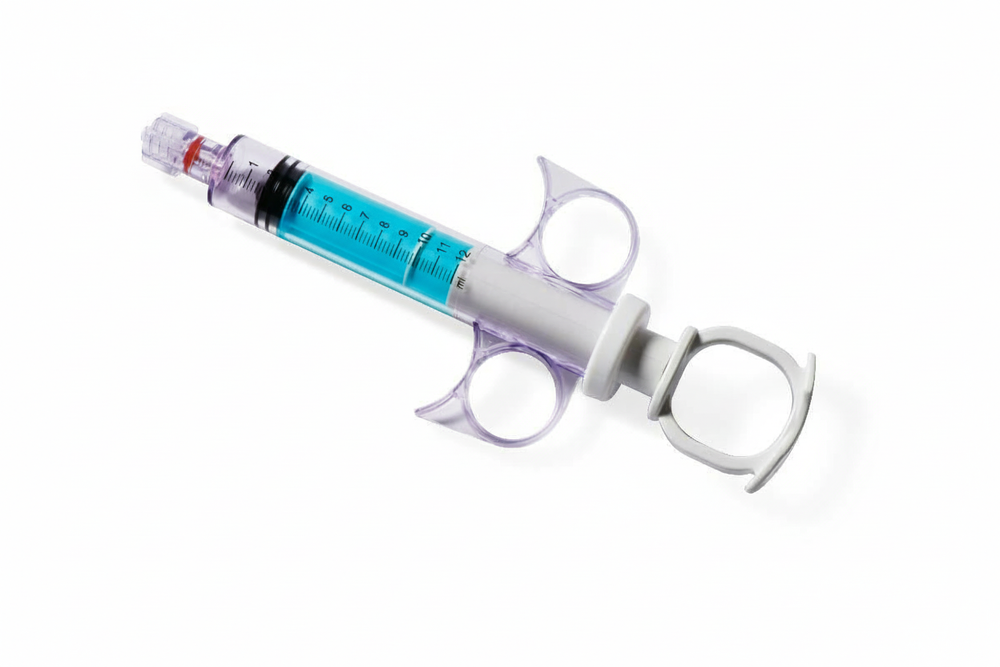
Manufactured from medical-grade clear polycarbonate material, this control syringe provides exceptional transparency that allows clinicians to easily visualize fluid contents, air bubbles, and aspiration results throughout procedures. The crystal-clear barrel material is essential for interventional radiology and catheter lab applications where visual confirmation of fluid type, volume, and the presence or absence of blood return is critical for procedural safety and accuracy. Clinicians can instantly verify that the correct fluid is loaded, identify any air bubbles that need to be expelled before injection, and observe blood flashback during aspiration to confirm proper catheter or needle placement.
The polycarbonate material is specifically selected for its combination of optical clarity, strength, and chemical resistance. Unlike acrylic or other plastics that may cloud, crack, or degrade when exposed to contrast media or other procedural fluids, medical-grade polycarbonate maintains its clarity and structural integrity throughout use. This durability ensures the syringe performs reliably even during lengthy procedures or when exposed to the various solutions commonly used in interventional settings.
The clear barrel also features bold black graduation markings that provide excellent contrast for accurate volume measurement. The high-visibility markings allow clinicians to precisely measure and deliver exact fluid volumes, which is essential for contrast administration where dosing must be carefully controlled based on patient weight, renal function, and procedural requirements. The clear markings remain easily readable even in the varied lighting conditions of catheter labs and interventional radiology suites.
Thumb Control Ring Style for Enhanced Ergonomics and Precision
The syringe features a thumb control ring design that provides superior ergonomic control and reduces hand fatigue during procedures requiring sustained or repeated injections and aspirations. The thumb ring allows operators to stabilize the syringe barrel with their fingers while using thumb pressure on the ring to advance or retract the plunger with precise, controlled movements. This ergonomic configuration provides better leverage and control compared to traditional syringe designs, enabling smoother, more controlled fluid delivery that is essential for high-quality angiographic imaging and safe contrast administration.
The thumb ring design is particularly valuable during procedures requiring one-handed syringe operation, allowing clinicians to maintain syringe control while simultaneously manipulating catheters, guidewires, or other procedural equipment with their other hand. This multitasking capability supports efficient workflow and reduces the need for assistant support during critical procedural moments. The ring also prevents the syringe from slipping or rotating during use, maintaining consistent orientation and control throughout aspiration and injection maneuvers.
For procedures requiring forceful aspiration, such as thrombus extraction or verification of catheter position through blood return, the thumb ring provides the mechanical advantage needed to generate adequate negative pressure without excessive hand strain. Similarly, during contrast injection for angiography, the controlled thumb pressure allows smooth, steady injection that produces optimal vessel opacification without the pulsatile flow that can occur with less controlled injection techniques.
Narrow Barrel Design for Smooth Injection and Easy Aspiration
The syringe barrel is engineered with a narrow diameter that provides multiple functional advantages for interventional procedures. The narrow barrel design reduces the force required to advance the plunger during injection, allowing clinicians to deliver fluids smoothly and consistently without excessive hand pressure. This ease of injection is particularly important during contrast administration for angiography, where smooth, controlled injection produces better image quality by ensuring consistent contrast flow and vessel opacification.
The narrow barrel also facilitates easier aspiration by reducing the plunger surface area, which means less negative pressure is required to retract the plunger and draw fluid into the syringe. This makes it easier to confirm catheter placement through blood return aspiration, withdraw samples for testing, or remove air from fluid-filled systems. The reduced aspiration effort is especially valuable during procedures requiring multiple aspiration attempts or when working with small-bore catheters where aspiration resistance may be higher.
Additionally, the narrow barrel design provides better tactile feedback during injection and aspiration, allowing clinicians to feel subtle changes in resistance that may indicate catheter occlusion, vessel spasm, or other procedural complications requiring attention. This enhanced sensitivity supports safer, more controlled procedures by providing early warning of potential problems.
Luer-Lock Tip for Secure, Leak-Free Connections
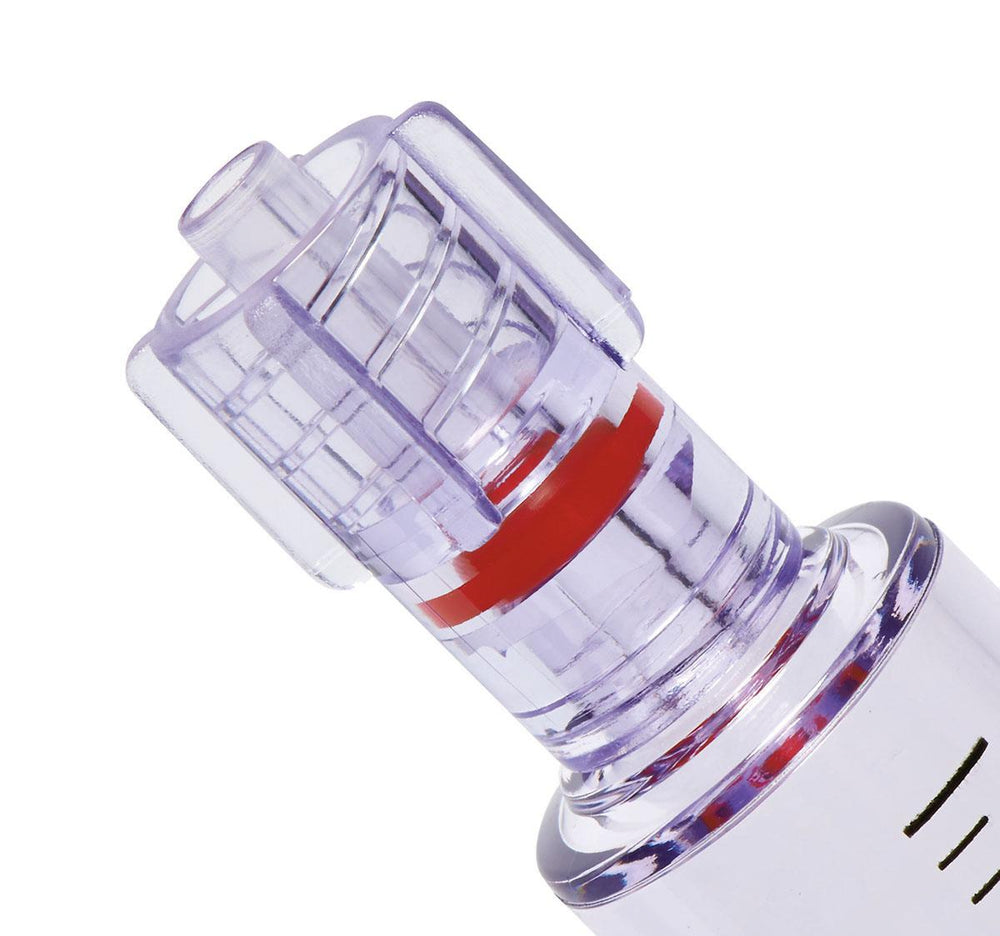
The syringe features a standard Luer-Lock tip that provides secure, threaded connections to catheters, needles, extension tubing, and other medical devices commonly used in interventional procedures. The Luer-Lock design creates a positive mechanical lock that prevents accidental disconnection during injection or aspiration, which is critical for maintaining sterile technique and preventing fluid leaks that could compromise procedural success or patient safety. The threaded connection is particularly important during forceful injection or aspiration maneuvers where slip-fit connections might separate under pressure.
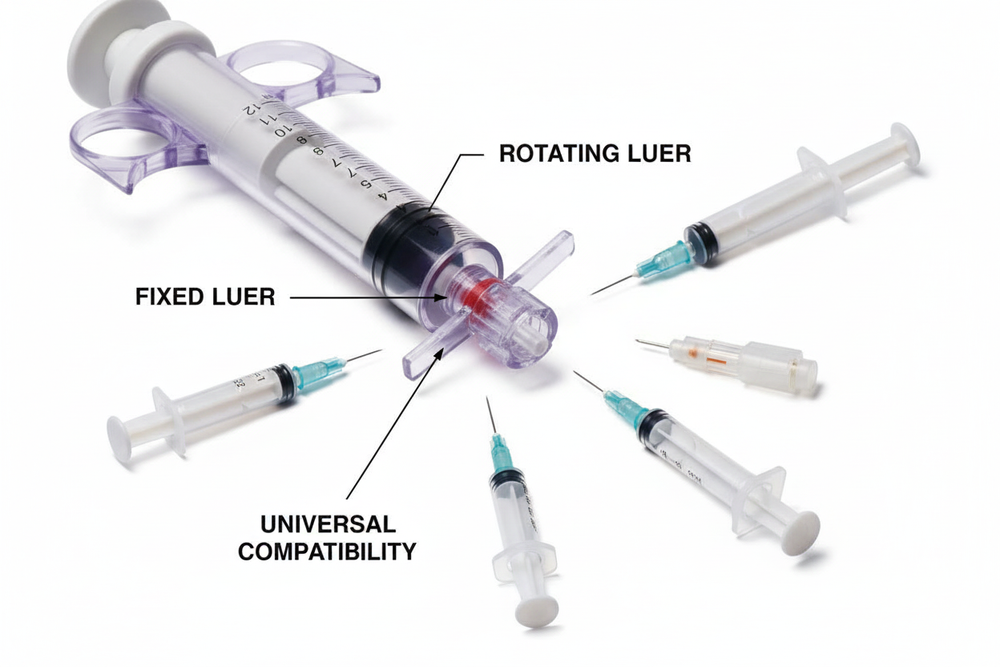
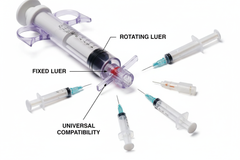
The Luer-Lock tip is manufactured to precise dimensional standards ensuring compatibility with all standard Luer-Lock medical devices regardless of manufacturer. This universal compatibility eliminates concerns about connection mismatches and ensures the syringe can be used with the full range of catheters, manifolds, and accessories used in interventional radiology and catheter lab procedures. The standardized connection also supports efficient workflow by allowing quick, confident connections without trial-and-error fitting attempts.
Rotating and Fixed Luer Options for Procedural Flexibility
This control syringe incorporates both rotating and fixed Luer connection options, providing flexibility to accommodate different procedural requirements and clinician preferences. The rotating Luer feature allows the syringe barrel to rotate independently of the connected device, preventing torque transmission that could twist or kink catheters during syringe manipulation. This is particularly valuable when working with delicate catheters or when the syringe must be repositioned during procedures without disturbing catheter position or orientation.
The fixed Luer option provides a rigid connection when rotational stability is preferred, such as during forceful injection or when precise syringe orientation must be maintained relative to the connected device. The ability to select between rotating and fixed configurations allows clinicians to optimize syringe performance for specific procedural steps, supporting both flexibility and stability as needed throughout complex interventional cases.
12 mL Capacity for Interventional Applications
The 12 mL capacity is specifically sized for common interventional radiology and catheter lab applications, providing adequate volume for contrast injections, saline flushes, and aspiration procedures without being so large that the syringe becomes unwieldy or difficult to control. This capacity is ideal for hand injection of contrast during angiography, where typical injection volumes range from 5-12 mL depending on vessel size and imaging requirements. The volume is also appropriate for saline flushing of catheters and manifolds, aspiration of blood samples, and other routine procedural tasks.
The moderate capacity strikes an optimal balance between having sufficient volume for most procedural needs while maintaining the compact size and precise control that are essential for interventional work. Larger syringes can be difficult to manipulate in the confined spaces of catheter lab sterile fields and may provide less precise control during injection, while smaller syringes require more frequent refilling that can disrupt procedural flow.
Sterile, Single-Use Disposable Design
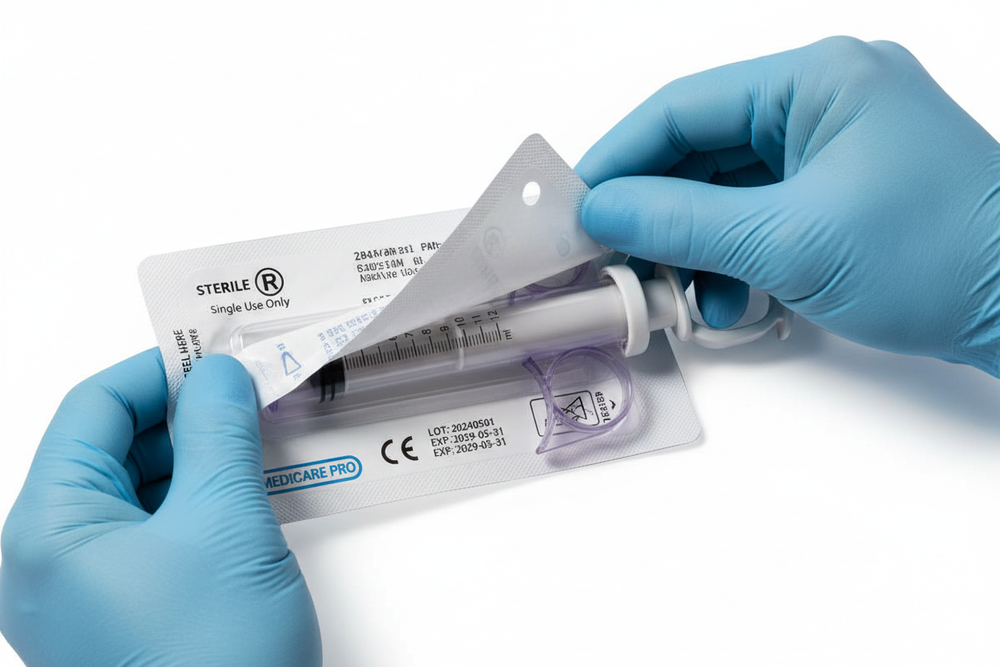
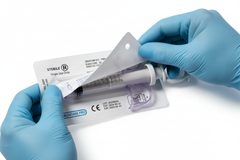
Each syringe is individually packaged in sterile blister packaging that maintains sterility until the moment of use, allowing syringes to be opened directly onto sterile fields or handed to scrubbed personnel without compromising aseptic technique. The sterile packaging is designed for easy opening with clear peel indicators and packaging that separates cleanly without generating particulates or requiring excessive force that might cause the syringe to be ejected from the package in an uncontrolled manner.
As single-use disposable devices, these syringes eliminate the infection control risks and reprocessing costs associated with reusable syringes. Each procedure receives a fresh syringe with optimal performance characteristics, without concerns about residual contamination, material degradation from repeated sterilization, or mechanical wear that could affect plunger smoothness or seal integrity. The disposable design also simplifies procedural workflow by eliminating the need to collect, clean, and resterilize syringes between cases.
Latex-Free for Universal Patient Safety
Manufactured completely free of natural rubber latex, these syringes are safe for use with latex-sensitive patients and healthcare workers. The latex-free composition eliminates the risk of triggering allergic reactions in individuals with latex sensitivities or allergies, making these syringes appropriate for universal use across all patient populations without the need to screen for latex allergies or maintain separate latex-free inventory. This universal compatibility simplifies supply management and ensures patient safety in emergency situations where allergy history may not be immediately available.
Ideal Applications and Clinical Settings
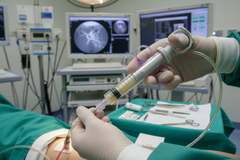
These control syringes serve essential functions across diverse interventional and diagnostic procedures. Interventional radiology departments use them for angiography, angioplasty, embolization procedures, and other image-guided interventions requiring precise contrast delivery. Cardiac catheterization labs rely on them for coronary angiography, ventriculography, and hemodynamic assessments. Vascular surgery, electrophysiology labs, neurointerventional procedures, and diagnostic imaging departments all benefit from the precise control and reliable performance these syringes provide.
The syringes are also valuable for any clinical application requiring controlled fluid aspiration or injection, including joint injections, aspiration of fluid collections, administration of local anesthetics, and various diagnostic and therapeutic procedures across multiple medical specialties.
Case Packaging for Procedural Supply Management
Packaged in cases of 10 sterile syringes, this quantity provides practical inventory for catheter labs, interventional radiology suites, and procedure rooms with moderate to high procedural volumes. The case format balances adequate supply with manageable storage requirements, ensuring facilities maintain sufficient stock without over-purchasing or dedicating excessive storage space to syringe inventory. For materials management and clinical departments, the standardized case quantity simplifies ordering, inventory tracking, and par level management.
Key Features and Benefits
- Clear Polycarbonate Barrel: Superior visualization of contents and air bubbles
- Thumb Control Ring: Enhanced ergonomics and precise plunger control
- Narrow Barrel Design: Smooth injection and easy aspiration with reduced effort
- Luer-Lock Tip: Secure, leak-free connections to catheters and devices
- Rotating and Fixed Luers: Flexibility for different procedural requirements
- 12 mL Capacity: Optimal volume for interventional applications
- Black Graduation Markings: High-visibility volume measurements
- Sterile Blister Pack: Individual sterile packaging for immediate use
- Single-Use Disposable: Eliminates cross-contamination and reprocessing
- Latex-Free: Safe for latex-sensitive patients and staff
- Medical-Grade Materials: Chemical resistant and durable construction
- Case of 10: Practical quantity for procedural inventory management
Technical Specifications
- Manufacturer: Medline Industries
- Brand: Medline
- MPN: DYNJSYR12CWR
- SKU: MEDYNJSYR12CWR-CS
- Application: Control syringe for interventional procedures
- Volume: 12 mL
- Barrel Material: Clear polycarbonate
- Barrel Color: Clear with black graduation markings
- Plunger Color: White
- Style: Thumb control ring style
- Tip Type: Luer-Lock
- Luer Options: Rotating and fixed
- Sterility: Sterile
- Packaging: Individual blister pack
- Usage: Single-use disposable
- Latex Content: Latex-free
- Safety Feature: Without safety mechanism
- UNSPSC Code: 42142608
- Case Quantity: 10 sterile syringes
- Unit of Measure: Case
Quality and Precision for Interventional Excellence
As part of Medline's comprehensive line of interventional and procedural supplies, these control syringes represent a commitment to quality, precision, and clinical performance. The combination of clear polycarbonate construction, ergonomic thumb ring design, and secure Luer-Lock connections makes them an essential tool for interventional radiologists, cardiologists, vascular surgeons, and other specialists performing image-guided procedures. Catheter labs and interventional suites trust these syringes to deliver the precise control, reliable performance, and consistent quality that support excellent procedural outcomes and patient safety.
Shipping & Return
xShipping Policy
We provide shipping worldwide and most of our orders are delivered within 7-15 days.
Return Policy
We have a 30-day return policy, which means you have 30 days after receiving your item to request a return.
To be eligible for a return, your item must be in the same condition that you received it, unworn or unused, with tags, and in its original packaging. You’ll also need the receipt or proof of purchase.
To start a return, you can contact us at cetabo.contact@gmail.com. Please note that returns will need to be sent to the following address: 2236 W Holcombe Blvd, Houston Texas 77030, United States
Related Products
Recently Viewed Products
- Choosing a selection results in a full page refresh.